

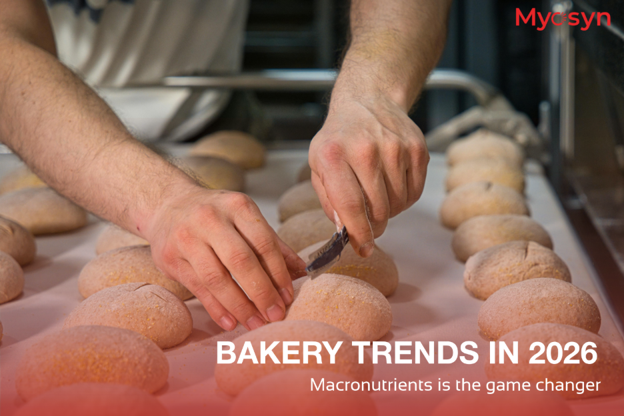
Nutrition as the Game Changer in Bakery Innovation
Consumers are becoming more health-conscious, and this shift is changing the way they think about everyday food choices — including bakery.
Health and wellness content are now part of daily life. Across social media, consumers are exposed to conversations about fitness, balanced eating, high-protein meals, sugar reduction, calorie awareness, and lifestyle-based food choices. This has made many shoppers more aware of what they consume, not only when buying specialised health products, but also when choosing familiar everyday foods.
For bakery manufacturers, this creates a clear opportunity. Consumers are not necessarily moving away from bakery, but they are becoming more selective. They are looking for products that still feel enjoyable while also fitting better into their personal health goals, dietary needs, and lifestyle preferences.
What Consumers See on the Label Matters
The nutrition panel is becoming an important part of the purchase decision. Consumers are paying closer attention to values such as protein, sugar, sodium, and calories before deciding whether a product suits them.
Protein is one of the most visible areas of interest. From breakfast products to snack-style bakery, higher protein positioning can help a product feel more filling, balanced, and relevant to active or health-conscious consumers.
Fibre is also gaining more attention as consumers become more aware of digestive health, satiety and balanced eating. In bakery, fibre can support a stronger nutrition profile, especially in breads, muffins, biscuits and snack-style products. However, it needs to be formulated carefully to maintain the right softness, structure and eating quality.
Sugar is another major focus. Many shoppers are becoming more aware of sugar content, particularly in sweet bakery products. This does not mean consumers no longer want enjoyment, but it does mean they may compare products more carefully and look for options that feel more considered.
Sodium is also part of the conversation, especially bakery products consumed regularly. While sodium may not always be promoted on the front of pack, it remains an important value for consumers who are trying to make more balanced food choices.
Calories are often used as a simple comparison point. They do not tell the full story of a product, but they are easy for shoppers to recognise and can influence how a bakery’s product is perceived.
Dietary Needs and Inclusive Bakery
Nutrition-conscious bakery is not only about numbers. It is also about making products more accessible to different consumer needs.
Gluten-free bakery is a strong example. For some consumers, gluten-free is a dietary requirement. For others, it may be part of a broader lifestyle preference. Either way, the demand reflects a wider expectation that familiar bakery products should be available in more inclusive formats.
For manufacturers, this requires careful development. Removing or replacing key ingredients can affect how a bakery product behaves during mixing, baking, cooling, packaging, and storage. A product that meets a dietary need still needs to perform reliably and remain commercially practical.
The Challenge for Manufacturers
Nutrition-led bakery innovation is not as simple as adding protein, reducing sugar, lowering sodium, or placing a claim on the label.
Every nutritional adjustment can influence the full product system. Protein enrichment, sugar reduction, sodium adjustment and gluten-free development all require careful consideration of ingredient interactions, process conditions, product stability, and final consumer acceptance.
This is where many promising concepts become more complex. A product may respond well to a consumer’s trend, but it still needs to work within real manufacturing conditions and remain consistent from batch to batch.
For food manufacturers, the key is to approach nutrition as part of the full product design, not as a single isolated claim.
What This Means for Product Development
Before developing a nutrition-focused bakery product, manufacturers need to understand the target consumer, desired positioning and production requirements.
The most important questions include:
Which nutritional value matters most to the target customer?
Is the goal of higher protein, reduced sugar, lower sodium, calorie awareness, or a specific dietary claim?
How will the change affect the overall product system?
Can the formulation be scaled successfully?
Will the final product remain consistent through production and shelf life?
There is no one-size-fits-all solution. A formulation designed for bread may not perform the same way in muffins, biscuits, cakes or snack-style bakery products. Each application needs to be developed around its own ingredients, process, and market expectations.
At Myosyn Industries, we work with food manufacturers to develop practical, customised ingredient solutions for real production needs. By combining food science knowledge with manufacturing experience, our team helps customers turn nutrition-focused ideas into bakery products that are achievable, consistent, and commercially relevant.
As health-conscious consumers continue to shape the bakery market, nutrition will remain one of the key drivers of innovation. The opportunity is not simply to follow the trend, but to create products that consumers understand, trust and choose again.